A Jetta that shakes when you ease away from a stop can make a calm drive feel expensive fast. Volkswagen Jetta DSG Transmission Shudder Problems at Low Speeds often show up during parking-lot crawls, stop-and-go traffic, hill starts, or that awkward half-throttle roll through a neighborhood. The driver feels a tremble, pulse, chatter, or delayed bite before the car settles down. That does not always mean the whole gearbox is dying. It does mean the car deserves a careful diagnosis before guesswork burns money. For U.S. owners comparing repair choices, warranty options, and resale risk, a trusted automotive ownership guide can help separate normal dual-clutch behavior from a warning sign. The real trick is knowing where the feel starts. A DSG does not creep and cushion like a classic torque-converter automatic. It uses clutches. So a small amount of takeoff texture can be normal, while repeat shaking, harsh engagement, heat warnings, or RPM flare points toward a fault that should not be ignored.
Why DSG Transmission Shudder Appears at Parking-Lot Speeds
Low-speed Jetta complaints all sound alike until you sit in the car and feel the pattern. One owner may describe a brief tremor in reverse. Another may feel a hard bite after rolling through a stop sign. A third may feel a soft pause, then a bump, as the car chooses first gear again. Same family of symptoms, different causes. That is why a shop that treats every shake as a failed gearbox can miss the cheaper fix sitting in front of it.
Why Low Speed Transmission Judder Feels Worse Than Highway Issues
Highway driving hides a lot. Once a DSG has selected a gear and the clutches are fully clamped, the car may feel clean and steady. The drama comes when the clutches slip on purpose at low speed. That slip is how the car eases away from a stop without a clutch pedal.
Low speed transmission judder feels bigger because the whole car is moving slowly. There is no wind noise, tire hum, or steady engine load to cover it. You notice the seat shake, the pedal twitch, and the tiny delay between your foot and the car’s response.
A real-world example: a Jetta GLI owner in suburban Ohio may feel the shake every morning while backing out of a sloped driveway. The car feels fine later on the freeway. That does not clear the gearbox. It only tells you the problem lives in the clutch engagement zone, not in steady cruising.
Normal DSG Feel Versus a Fault You Should Track
A healthy DSG can feel more mechanical than a regular automatic. You may feel a light grab at walking speed, more like a manual car driven by a careful person than a soft old sedan. That alone is not a repair order.
The line gets crossed when the same shake returns under the same conditions. Warm engine, light throttle, first-to-second shift, reverse, or hill start. Patterns matter. Random roughness can come from traffic rhythm. Repeat roughness points to a system asking for attention.
One non-obvious clue is brake use. Some drivers ride the brake and gas in tight spaces, which confuses clutch control and builds heat. The gearbox may feel guilty, but the driver input is part of the scene. Good diagnosis includes the road, the foot, and the car.
What Causes Dual Clutch Transmission Problems Before Repair Bills Grow
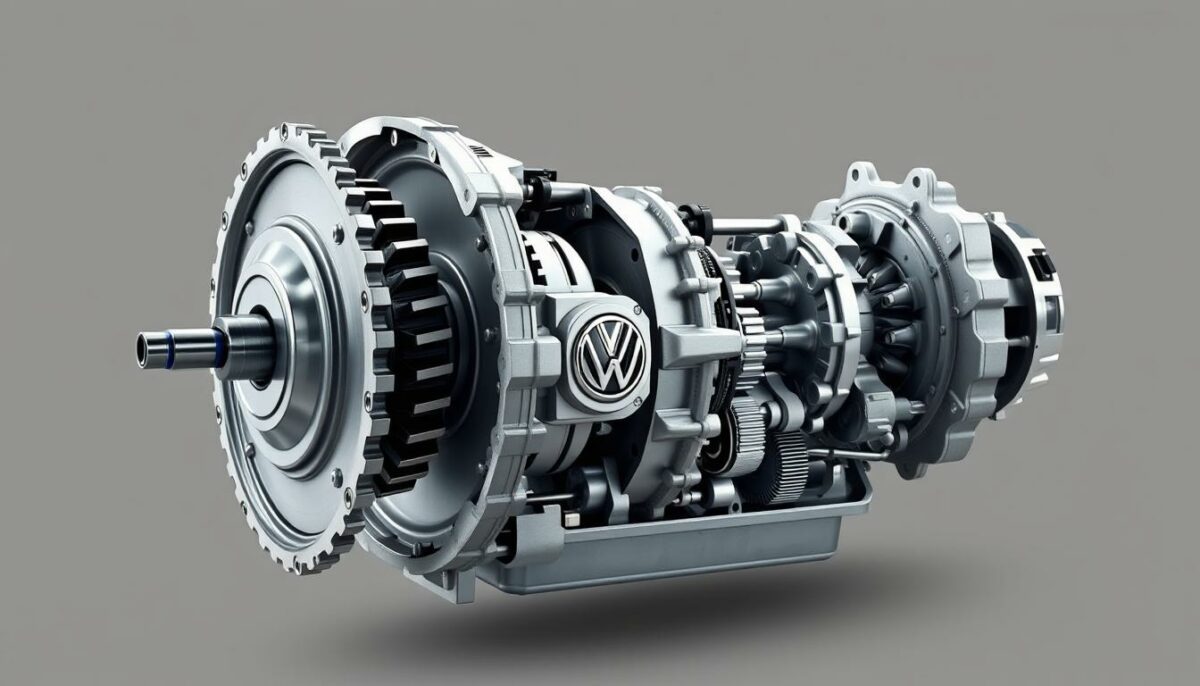
A DSG is not one single part. It is a clutch system, hydraulic control unit, sensors, software, fluid, mounts, and engine torque management all working in tight timing. When that timing gets off, the car may shake before it throws a warning light. That early stage is where owners can save the most money, because the symptom has not yet turned into a chain reaction.
Clutch Wear, Heat, and Stop-and-Go Driving
The clutch pack takes the blame first because it sits closest to the feeling. If the friction material is worn, glazed, contaminated, or heat-stressed, takeoff can feel like a manual car with a tired clutch. It grabs, slips, grabs again, then smooths out once speed builds.
City driving makes this worse. Think Los Angeles traffic on I-405, Chicago side streets after a Cubs game, or crawling through a school pickup line in Texas heat. The DSG keeps working in the same narrow speed band, and that is where clutch control has the least room to breathe.
The counterintuitive part is that gentle driving can still create trouble. A driver who creeps for long stretches without stopping may build more clutch heat than a driver who leaves a larger gap, stops cleanly, then moves with a firmer input. Smooth does not always mean easy on the parts.
Mechatronic Control and Fluid Condition
The mechatronic unit is the gearbox’s traffic cop. It reads speed, throttle, clutch position, pressure, and gear demand, then tells the transmission what to do. When its decisions get slow or uneven, you may feel Jetta DSG hesitation before you feel a hard failure.
Fluid condition matters because DSG fluid does more than sit in the case. It helps with pressure, cooling, and clean movement inside the system. Old or wrong fluid can make a marginal issue feel worse, while correct service can restore clean engagement if no hard damage has happened.
This is where a maintenance record becomes more than paperwork. A used Jetta with a clean body and cheap price may still carry hidden risk if DSG service history is missing. Before buying one, compare the seller’s receipts with a used car inspection checklist and make the gearbox test drive part of the deal.
How to Find the Source Without Paying for the Wrong Repair
The best diagnosis starts before the scan tool. It starts with a repeatable complaint. A technician needs to know when the shake happens, how warm the car is, what gear it is in, and whether the engine RPM jumps or falls. Vague notes lead to vague repairs. A clear symptom map points the shop toward the source.
Build a Test Drive That Recreates the Problem
Do not walk into the service lane with “it drives weird” if you can do better. Write down the speed, weather, engine temperature, driving mode, slope, and throttle feel. A phone note after three drives can save an hour of shop time.
Try a safe test route with a flat parking lot, a mild hill, and a few slow turns. Feel for vibration while creeping forward, backing up, easing from zero to 10 mph, and rolling from first into second. Do not abuse the car. The goal is to repeat the symptom, not punish the clutch.
A sharp shop may ride with you. That is worth asking for. A five-minute drive with the owner can beat a day of guessing, because the driver knows the exact move that wakes the problem.
Rule Out Engine Mounts, Misfires, and Software First
Not every shake that feels like a gearbox comes from the gearbox. A weak engine mount can let normal clutch engagement rock the drivetrain. A misfire under light load can mimic a shudder. Dirty throttle response can make takeoff feel uneven.
Scan data helps here. A shop should check for engine codes, transmission codes, adaptation values, fluid leaks, mount condition, and service history. A reset or adaptation procedure may help in some cases, but it should not be used to hide a worn clutch or pressure fault.
Software also belongs in the conversation. Automakers update control logic when drivability complaints pile up. That does not mean every Jetta has a hidden campaign waiting. It means a dealer or VW specialist should check whether the car has open updates, warranty extensions, or service actions tied to its VIN.
Repair Choices, Warranty Angles, and Owner Strategy in the U.S.
Once the source is clear, the owner still has choices. Dealer, independent VW specialist, used transmission, clutch service, fluid service, software update, or trade-in. The wrong choice can turn a manageable low-speed issue into a financial bruise. The right choice depends on age, mileage, warranty status, and how long you plan to keep the car.
When Jetta DSG Hesitation Is Not a Gearbox Failure
Jetta DSG hesitation can come from normal clutch logic at low speed, especially if the driver expects a soft automatic feel. The car may pause while it decides between creeping, downshifting, or fully engaging. That pause feels strange, but it is not always damage.
The test is progress. Is it getting worse? Does it happen hot and cold? Is there a warning light? Is reverse harsher than drive? Does the RPM flare while speed does not rise? Those answers separate a design feel from dual clutch transmission problems that need repair.
Here is the non-obvious money point: replacing parts too early can be as wasteful as waiting too long. A careful fluid service, adaptation check, mount inspection, and software review may be the right first step. Throwing a transmission at a drivability complaint without proof is not diagnosis.
What to Ask the Dealer or VW Specialist
Ask direct questions. Has the VIN been checked for recalls, service campaigns, and software updates? Are there stored or pending codes? What are the clutch adaptation readings? Is the fluid correct and at the proper level? Was the car tested cold and fully warm?
Use the official NHTSA recall lookup as your safety check, then call Volkswagen or a dealer with your VIN. NHTSA can show safety recalls, but it will not replace a hands-on transmission diagnosis.
For repair planning, compare notes with common transmission repair warning signs and keep all invoices. If the car is under warranty, the record shows you reported the issue early. If you sell the car later, clean paperwork can calm a buyer who has heard scary DSG stories online.
Conclusion
A low-speed shake in a Jetta deserves attention, but panic is a poor repair strategy. The smartest owners slow the problem down. They note the pattern, check the VIN, confirm service history, and ask for a diagnosis that separates clutch behavior from engine, mount, software, or fluid issues.
That is why DSG transmission shudder deserves a methodical approach instead of a parts cannon. A dual-clutch gearbox can feel different by design, yet repeat judder, harsh engagement, warning lights, or worsening takeoff behavior should be treated as a real warning. The gap between “normal feel” and “expensive fault” is often found during a careful test drive.
If you own or are buying a Volkswagen Jetta with low-speed shake, get the symptom documented, use a VW-aware shop, and make the repair decision with evidence in hand. Guessing gets expensive. Good records protect you.
Frequently Asked Questions
How do I know if my Jetta has a DSG transmission?
Check the window sticker, owner’s manual, VIN report, or dealer build sheet. Many U.S. Jetta trims use a regular automatic, while performance trims and some earlier models may use DSG. Do not rely on the shifter shape alone.
Is a small shake normal in a Volkswagen DSG at low speed?
A light mechanical feel can be normal because DSG units use clutches instead of a torque converter. Repeat shaking, harsh engagement, RPM flare, warning lights, or worsening behavior is not something to brush off.
Can old DSG fluid cause low-speed judder?
Yes, poor fluid condition can affect pressure control, cooling, and engagement feel. It may not be the only cause, but missing service history should be treated as a risk marker during diagnosis.
Should I keep driving if my Jetta shakes from a stop?
Gentle short trips may be possible if there are no warnings, burning smells, or slipping. Avoid heavy throttle, hill creeping, and long stop-and-go drives until the car is checked. Stop driving if the gearbox overheats or loses drive.
How much does DSG repair usually cost?
Costs vary by model, region, shop type, and the failed part. Fluid service is far cheaper than clutch or mechatronic work. A full gearbox replacement can become costly, so diagnosis before approval matters.
Can a software update fix DSG hesitation?
Sometimes it can improve shift timing or clutch behavior, especially when the issue is control logic rather than worn parts. Software should be checked by VIN, but it should not be used as a cover for mechanical wear.
Is a used Jetta with DSG problems worth buying?
Only with a proper inspection, repair estimate, and price discount. A cheap car can become expensive if the clutch pack, mechatronic unit, or transmission needs work. Get the fault confirmed before negotiating.
What should I tell the mechanic about the shudder?
Share when it happens, the speed, gear, temperature, slope, and throttle position. Mention whether it happens in reverse, first gear, or the first-to-second shift. Clear notes help the shop recreate the problem faster.