A Sonata that still starts in the driveway can turn risky fast if the bearing noise under the hood is already telling the truth. For many U.S. owners, engine seizure recalls are less about paperwork and more about whether the car will stall on an interstate ramp tomorrow. The first move is simple: check the VIN, stop driving if the car knocks or shows oil-pressure warnings, and call a Hyundai dealer before paying out of pocket. The tricky part is knowing which symptoms matter and which documents protect you.
This issue has followed several Hyundai Sonata model years, mainly because some engines were linked to bearing wear, restricted oil flow, stalling, and possible engine replacement. That does not mean every Sonata is unsafe. It means owners should treat a warning sign as a deadline, not background noise. Keep repair records, oil-change proof, recall letters, and dealer notes in one folder. For broader consumer car-safety updates, it also helps to track how recall language changes over time, because one sentence in a notice can decide whether your next step is a free inspection, a warranty claim, or a fight over paperwork.
Why Engine Seizure Recalls Turn a Sonata Problem Into a Safety Issue
The hard part about this problem is that it can sound like normal old-car trouble at first. A tick becomes a knock. A commute feels a little weak. Then the oil light flashes at the worst possible moment. Hyundai’s older Sonata engine issue was not framed as a comfort defect. Federal recall documents tied certain failures to connecting rod bearing wear, possible stalling, and a higher crash risk if the engine loses power while moving. The safety angle matters because a stall in a driveway is one problem, while a stall in the left lane outside Atlanta is another. Same engine. Different danger.
How connecting rod bearing failure changes the risk
A healthy bearing keeps moving parts separated by a thin film of oil. When debris or wear interferes with that oil film, metal starts living too close to metal. The sound can be sharp, rhythmic, and tied to engine speed. That is why a knock that speeds up with RPM deserves a different reaction than a loose heat shield under the car.
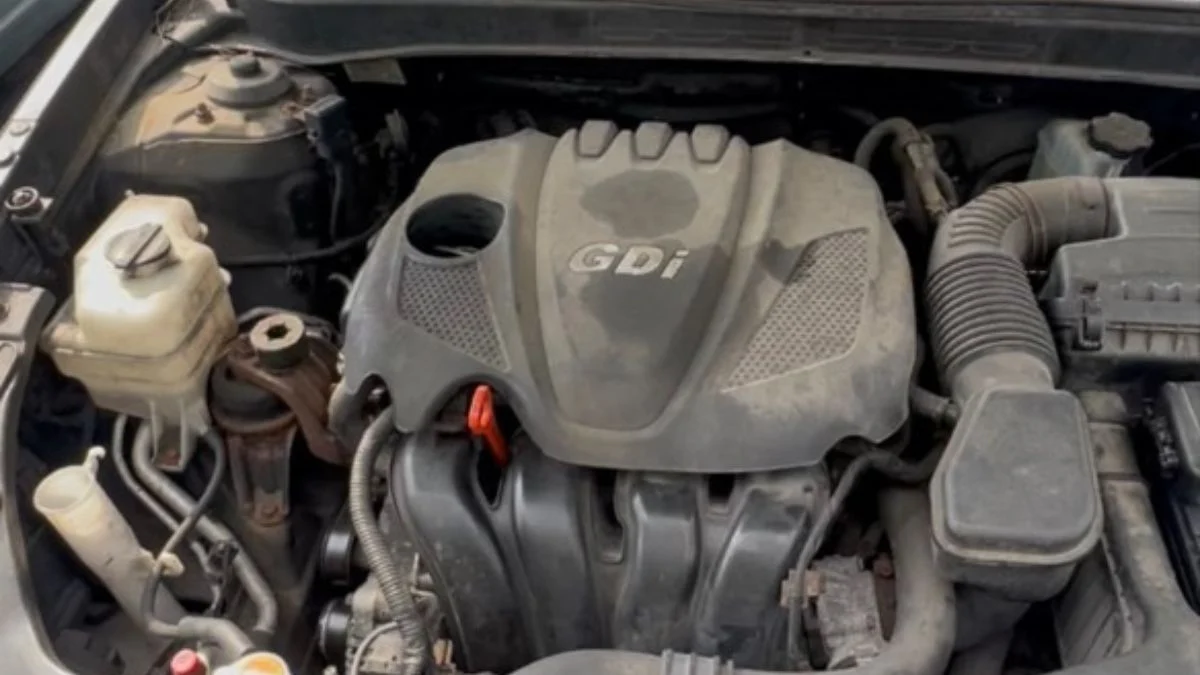
NHTSA documents for campaign 15V-568 described certain 2011 and 2012 Sonata vehicles with 2.0-liter or 2.4-liter GDI engines and said metallic debris could restrict oil flow through connecting rod bearings, causing damage and possible engine failure. The same document said engine failure could stall the vehicle and raise crash risk. That is not a small shop complaint. It is the kind of risk you handle before the next freeway merge.
Here is the counterintuitive part: the worst sign may not be smoke, a bang, or a dashboard full of lights. It may be a plain knocking noise on a cold start that fades enough to tempt you into driving. Many owners wait because the car still moves. A bearing problem can give you that false comfort right before it takes the choice away. The engine does not need to be loud for months to be in trouble.
Why a Hyundai engine recall is different from a normal repair bill
A normal repair starts with diagnosis and ends with your wallet. A Hyundai engine recall starts with eligibility. That difference matters. If your VIN is part of an open campaign, the dealer path can change the cost, the documentation, and the order of decisions. You should not approve a major tear-down or used engine swap until you know where the VIN stands.
The 2017 NHTSA recall report for campaign 17V-226 listed 2013 and 2014 Sonata sedans with certain 2.0-liter and 2.4-liter GDI engines built at Hyundai Motor Manufacturing Alabama. It described residual machining debris that could restrict oil flow and lead to premature bearing wear, cyclic knocking, oil-pressure warning lights, and loss of motive power while the vehicle is in motion.
This is where many owners lose ground. They treat the dealer as the last call after an independent mechanic has already replaced parts, drained fluids, or thrown away evidence. An independent diagnosis can help, but the recall process often needs the car in a condition Hyundai can inspect. The boring folder in your glove box may be worth more than a dramatic video of the car being towed. Paper feels dull until it saves you from paying for the same defect twice.
Warning Signs Owners Should Treat Like a Deadline
Once you understand the risk, the next question becomes personal: can you drive it today? The answer depends on what the car is doing right now, not how loyal it has been for ten years. A Sonata can rack up school runs, grocery trips, and long highway miles, then start sending warning signs in a short window. Do not negotiate with those signs. The owner who catches the pattern early has more options than the owner who waits for the engine to prove the point. That matters in places where a tow can take hours, such as a rural stretch in Kansas or a crowded beltway after work.
Knocking, hesitation, and oil lights are not background noise
The recall language gives owners a useful warning map. For the 2013 and 2014 Sonata recall, NHTSA listed possible warnings such as engine knocking, reduced power or hesitation, a check-engine light, and an engine oil-pressure warning lamp. Those are not equal in severity, but none should be ignored when they appear with engine noise.
A real-world example: you start a 2013 Sonata in a Target parking lot in Ohio, hear a hollow knock for five seconds, then notice the car hesitates while pulling into traffic. If the check-engine light joins the party, the smart move is not to “see if it clears.” Call the dealer, ask whether the VIN has any open engine campaign, and avoid a long drive until someone checks it. That one call may sound boring, but it creates a time stamp before the story gets expensive.
Sonata engine failure often feels unfair because the owner may have no clear warning a week earlier. That does not make the warning signs useless. It means the window can be short. Treat a new knock like a smoke alarm, not a squeaky cabinet. You do not need to diagnose the bearing in your driveway; you need to stop adding miles while the question is open.
When to stop driving instead of heading home
If the oil-pressure light comes on, shut the engine down as soon as you can do so safely. Low pressure can turn a damaged bearing into a seized engine fast. A check-engine light alone may allow a careful trip to a nearby repair point, but a flashing light, loud knock, power loss, or oil-pressure warning changes the plan.
A safe pull-off beats a heroic drive home. Put the hazard lights on, move away from traffic, and call roadside assistance. Tell the tow operator not to keep starting the car to “test it.” Each start can add wear if the bearing is already starved for oil. If the car stopped on a shoulder, your job is traffic safety first and engine proof second.
The non-obvious move is to record the quiet details. Take a photo of the dash, mileage, VIN plate, oil level if safe, and the tow receipt. If a Hyundai engine recall claim later turns on timing, mileage, or symptom history, those small records can carry weight. Memory gets fuzzy after a tow truck, a missed work shift, and a service writer who is handling six other cars before lunch.
How to Check Your VIN, Dealer Status, and Repair Path
This is where owners should slow down. Model year alone is not enough. Engine type, production date, plant, previous campaign work, and software updates can matter. The cleanest path starts with the VIN, because the VIN is what recall systems use to match a specific car to a specific remedy. A neighbor’s 2012 Sonata story may be useful, but it is not proof for your car. The VIN is the starting line. It also keeps the conversation away from rumor, forum panic, and the friend who swears every Sonata has the same answer.
Use the VIN, not the model-year guess
The NHTSA recall lookup is the official place to check a vehicle by VIN, and NHTSA explains that recalls are issued when a manufacturer or the agency finds an unreasonable safety risk or a failure to meet minimum safety standards. The same site also lets owners report a safety problem, which can matter when a pattern is still being reviewed.
Hyundai also maintains a VIN validation page for the Sonata and Santa Fe Sport engine recall campaign. That page tells owners to enter the VIN to see whether the vehicle is affected, and it identifies 2013 and 2014 Sonata vehicles with 2.0-liter and 2.4-liter GDI engines built at Hyundai Motor Manufacturing Alabama as part of that campaign.
Use both systems. NHTSA gives the federal recall view. Hyundai gives the manufacturer service view. If one says the recall is closed, ask what repair or inspection closed it. Closed does not always mean the engine was replaced. It may mean an inspection, software update, or past campaign step was completed. For a used buyer, that difference can change the price you should pay or whether you walk away.
What to ask before the car goes on a lift
Call the Hyundai dealer with your VIN, mileage, current symptoms, and any trouble codes. Ask three plain questions: Is there an open engine campaign? Has the knock sensor software update been completed? What records do you need before inspection? Keep the answers in writing when possible, even if that means asking for an email summary or saving the appointment confirmation.
For your own notes, use used car recall checklist and engine warning light repair guide as placeholders for internal links. Those pages can support the owner who is not ready to argue with a service department but needs a calm plan. The point is not to sound like a lawyer. The point is to stop confusion from becoming a second repair bill.
The non-obvious question is not “Will this be free?” The stronger question is “What has to happen for Hyundai to make a coverage decision?” That wording pushes the conversation toward process. A service writer may not promise a free engine on the phone, but they can explain whether the car needs a bearing-clearance test, code scan, maintenance records, photos, or Hyundai approval. Process beats panic.
What to Do If the Sonata Already Stalled or Seized
A seized engine changes the mood. Now you are dealing with towing, missed work, fear over the loan balance, and a repair number that may be higher than the car’s trade-in value. Slow hands help here. The first day after a stall is when owners make rushed choices that hurt their claim. Your goal is to preserve the facts, keep the vehicle available for inspection, and avoid spending money before the coverage path is clear. That discipline can feel slow when you need a car Monday morning, but rushed repairs can close doors you still need open.
Document the failure before the story gets messy
Start with a timeline. Write down where you were, how fast you were going, what lights appeared, what noises you heard, and whether the engine restarted. Add the mileage, oil-change history, and the name of anyone who inspected the car. If the vehicle stalled while moving, include road conditions and traffic. That sounds fussy until someone asks the same question three weeks later.
NHTSA’s 2017 recall report noted that some customers reported stalling events, including some at higher speeds, while others were able to restart or move to the roadside. It also said the remedy program involved dealer inspection and, when needed, replacement of the engine sub-assembly or short block.
Do not authorize a junkyard engine before asking Hyundai for a decision if your VIN may qualify. A used replacement can get the car moving, but it can also muddy the record. If you need transport, ask the dealer and Hyundai customer care about rental, towing, or reimbursement options tied to the campaign or settlement terms before you spend money you cannot recover. A fast fix can become the wrong fix when coverage is still undecided.
Used owners, denied claims, and the paper trail that matters
Second and third owners often assume they are out of luck. That assumption can be expensive. The Hyundai Theta settlement site says the court-approved settlement covers certain Hyundai Sonata model years with 2.0-liter and 2.4-liter Theta II GDI engines, and it states that some class vehicles received a lifetime powertrain warranty extension for the short block assembly after the knock sensor software update, subject to terms and limits.
That does not mean every denial is wrong. Sludge, missing maintenance history, salvage events, wrong engine, prior repairs, or an incomplete software update can change the answer. Still, a denial should be specific. Ask for the reason in writing. Ask what document would change the decision. Ask whether Hyundai customer care has opened a case number.
Sonata engine failure cases are often won or lost on plain records: oil-change receipts, recall completion history, dealer photos, diagnostic codes, and the exact wording on the repair order. A neat folder will not fix a damaged engine. It can stop your claim from becoming a vague argument about who remembers what. That is not exciting advice, but it is the advice owners usually wish they had followed earlier.
Conclusion
A Hyundai Sonata with a bearing knock is not asking for another week of errands. It is asking for a decision. Check the VIN, listen to the warning signs, and keep every service record before the car becomes a tow-yard problem. The safest owner is not the one who knows every campaign number. It is the one who acts early and asks better questions.
The reason engine seizure recalls matter is simple: a failing engine can move from noise to stall faster than most drivers expect. That is especially true when the symptom feels small enough to postpone. Do not let age, mileage, or used ownership make you silent before you have checked the official path. Your next step should be calm, written, and direct: verify the VIN, schedule the dealer inspection, and make Hyundai explain the coverage decision in writing. If the car is already making noise, do that before the next errand, not after the next warning.
Frequently Asked Questions
How do I know if my Hyundai Sonata has an engine recall?
Check the 17-digit VIN through NHTSA’s recall lookup and Hyundai’s recall or campaign page. Do not rely on model year alone. Some recalls depend on engine type, plant, production date, and prior campaign completion.
Is it safe to drive a Sonata with a knocking engine?
A light tick may have many causes, but a rhythmic knock that rises with RPM needs fast attention. Stop driving if the oil-pressure light appears, power drops, or the engine sounds harsh. A tow is cheaper than a seized engine.
What does a connecting rod bearing failure sound like?
It often sounds like a metallic knock from deep in the engine. The rhythm may speed up as RPM rises. The sound can be louder during startup or acceleration, and it should never be treated as normal aging.
Will Hyundai replace my Sonata engine for free?
Possibly, but it depends on VIN eligibility, campaign status, diagnostic results, maintenance condition, and settlement or warranty terms. Ask the dealer what inspection is required and request any approval or denial reason in writing.
Can a used Hyundai Sonata still qualify for engine coverage?
Yes, some Hyundai engine programs and settlement terms have applied to later owners, not only original buyers. The answer still depends on the exact vehicle, completed updates, maintenance history, and whether exclusions apply.
What should I do if my Sonata stalls while driving?
Move to a safe place, turn on hazards, and avoid repeated restart attempts. Photograph the dash, mileage, and warning lights if safe. Tow the car to a Hyundai dealer or a trusted shop, then open a case with Hyundai.
Does a check-engine light mean the engine is about to seize?
Not always. A check-engine light can point to many issues. When it appears with knocking, hesitation, reduced power, or oil-pressure warnings, treat it as urgent and avoid long drives until the car is checked.
What records help with a Hyundai Sonata engine claim?
Oil-change receipts, repair orders, recall completion records, diagnostic codes, tow receipts, photos of warning lights, and dealer notes all help. Keep dates and mileage clear. A short written timeline can also support your case.