A car rarely tells you the truth in one clean sentence. Failing mass airflow sensor symptoms often show up as hesitation, rough idle, weak acceleration, poor fuel mileage, or a check engine light that seems to arrive before the problem feels serious. The tricky part is that these signs can look like spark plug trouble, vacuum leaks, dirty fuel injectors, or even bad gas from a sketchy station off the highway.
That is why drivers need a sharper way to read the clues, not a panic button. A MAF sensor measures how much air enters the engine so the computer can match fuel to that airflow. When that number goes wrong, the whole drive can feel off. For owners comparing repair guidance through trusted auto maintenance resources, the goal is simple: know what the sensor can cause, what it cannot prove by itself, and when a scan tool should come before a new part.
Why Mass Airflow Sensor Symptoms Feel Like Ordinary Engine Trouble
A failing airflow meter does not usually announce itself like a flat tire. It hides inside normal driving moments: the light turns green, you press the gas, and the car pauses. You start it cold before work, and the idle dips lower than usual. You merge onto I-95 or I-10, and the engine feels a step behind your right foot.
The air count your engine depends on
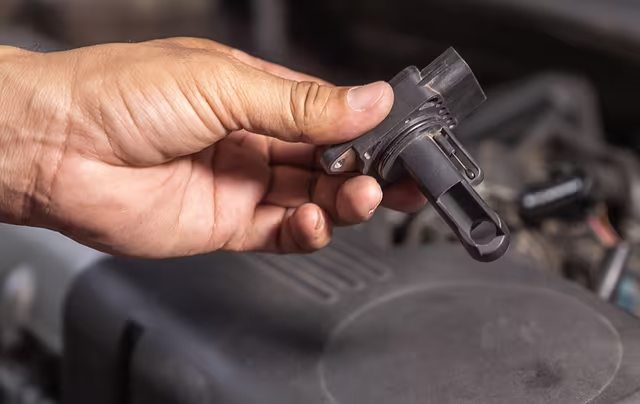
The MAF sensor sits in the intake path, where it reads incoming air before that air reaches the engine. The engine computer uses that reading to decide how much fuel to inject. When the reading is accurate, combustion feels smooth. When it drifts, the fuel mix can run lean or rich.
Lean means too much air for the amount of fuel. Rich means too much fuel for the amount of air. Neither one feels clean from the driver’s seat. A lean mix can cause stumble, hesitation, rough idle, or even stalling. A rich mix can waste fuel, foul spark plugs, and leave a fuel smell near the tailpipe.
Here is the part many drivers miss: the sensor may not be dead. It may be dirty. A thin film from dust, oil vapor, or a poor air filter seal can coat the sensing wire. The part still sends a signal, but the signal lies by a small amount. Small lies matter when the engine computer adjusts fuel many times per second. Firestone explains that the ECU or PCM uses MAF data to calculate fuel for incoming airflow, and faulty readings can throw off that balance.
Why small readings create big drivability problems
A bad MAF sensor can make a car feel moody because the computer trusts the wrong witness. It does not know the air reading is suspicious unless the data falls outside expected limits. Until then, it may keep adjusting fuel around bad information.
That is why a driver in Phoenix may notice poor pull on hot afternoons, while a driver in Minnesota may complain more about cold starts. The sensor problem is the same type of failure, but weather, traffic, and engine load change how it shows up. Stop-and-go driving exposes idle and low-speed stumble. Highway ramps expose weak acceleration.
This also explains why guessing gets expensive. A shop can replace spark plugs, clean the throttle body, or recommend fuel system service before the real problem shows up clearly. Sometimes those parts need attention. Sometimes they do not. The smarter path is to connect the symptom to the conditions: cold start, warm idle, quick throttle, uphill pull, or steady cruise.
For a deeper next step after airflow checks, connect this issue with engine misfire diagnosis, because misfire codes and MAF problems can overlap in ways that fool quick inspections.
Drivability Clues You Can Feel Before a Scan Tool Speaks
By the time a warning light appears, you may have felt the problem for days. That is not rare. The onboard computer needs enough bad data, under the right conditions, before it stores a code. Your hands, ears, and fuel receipts may notice the pattern earlier.
Rough idle, stalling, and shaky starts
A rough idle is one of the most common early clues. The engine may shake at a stoplight, dip below normal RPM, or feel like it is catching itself before dying. In a driveway, you may hear the idle hunt up and down instead of settling into a steady rhythm.
Cold starts can make the issue easier to spot. The engine needs a richer fuel mix when cold. If the sensor underreports airflow, the computer may add too little fuel. The engine cranks, starts, and then struggles. It may need a second try, or it may start but stumble for the first few seconds.
Stalling is the louder warning. A car that dies after starting or stalls while idling in traffic needs attention soon. It does not mean the MAF sensor is guilty by itself. Vacuum leaks, a dirty throttle body, weak fuel pressure, or ignition faults can act the same. But when rough idle arrives with poor throttle response and fuel economy changes, the airflow reading deserves a close look.
Engine hesitation during city driving
Engine hesitation often appears when you ask for power after coasting. You roll through a neighborhood turn, press the pedal, and the car thinks before moving. That pause can feel small at first. Then it becomes annoying.
In city traffic, this can make the vehicle feel jumpy. One moment it drags; the next moment it catches up. That uneven response happens because the engine computer keeps correcting fuel after the airflow reading has already led it wrong. A clean air signal helps the computer predict what the engine needs. A bad one turns every pedal press into a guess.
The counterintuitive part is that highway driving may feel better than low-speed driving. Steady cruising gives the computer a calmer pattern. Parking lots, school pickup lines, and slow turns create fast airflow changes. That is where a weak sensor often feels worse.
Drivers often blame the transmission when this happens. That is understandable. A hesitation followed by a surge can feel like a late shift. On some vehicles, airflow data can affect shift behavior because the powertrain computer uses engine load to decide timing. That does not mean the transmission is failing. It may mean the engine is feeding the transmission bad load information.
Warning Lights, Fuel Use, and Exhaust Clues That Narrow the Problem
Once the driving feel changes, the next clues usually come from the dashboard, gas pump, or tailpipe. None of them proves the sensor alone. Together, they can move the diagnosis from vague to useful.
Why the check engine light may point at airflow
A check engine light is not a diagnosis. It is a request for one. The U.S. Environmental Protection Agency says an OBD system can store diagnostic trouble codes and turn on a dashboard warning when it detects a problem, often before the driver notices a clear drivability issue.
For airflow problems, common code families may include MAF circuit or performance codes, often in the P0100 to P0104 range. Lean mixture codes can also appear, such as codes that point toward unmetered air or fuel mixture trouble. A code reader gives direction, not a final answer.
That distinction matters. A P0101 code, for example, may mean the sensor reading does not match what the computer expected. The cause could be a dirty sensor, cracked intake boot, loose clamp, clogged air filter, wiring issue, or an aftermarket intake that disrupts airflow. Replacing the sensor without checking the intake path is how a simple repair becomes a repeat repair.
A flashing warning light is different. That often points toward active misfire that can damage the catalytic converter. If the light flashes, reduce driving and get the vehicle checked fast. The MAF sensor may be part of the chain, but the immediate risk is bigger than one sensor.
Poor mileage, fuel smell, and black smoke
Fuel economy is a slower clue, but it is often honest. If your usual commute suddenly needs more gas and your driving habits have not changed, the engine may be burning fuel in the wrong ratio. A rich condition can waste fuel without making the car feel broken at first.
Black smoke is a stronger sign of a rich mixture. You may see it under acceleration, or someone behind you may mention it. A fuel smell can also show up after startup or at idle. These signs should not be ignored because excess fuel can stress the catalytic converter over time.
A lean condition can leave different clues. The engine may feel weak, run hotter, or hesitate more under load. You might not smell fuel at all. Instead, the car feels like it cannot get enough push when climbing a grade or passing on a two-lane road.
This is where maintenance records help. A driver who recently replaced an air filter and then noticed new hesitation should inspect the filter box and intake tube first. A loose airbox clip or folded filter edge can let air bypass the measured path. That is not a failed sensor. It is air entering where the computer did not count it.
For readers tracking fuel changes over several fill-ups, pair this with a fuel economy troubleshooting guide, since tire pressure, dragging brakes, winter fuel blends, and short trips can also cut mileage.
What to Check Before Replacing the Sensor
The right repair starts with humility. The MAF sensor is easy to blame because it sits near the air filter and has a name that sounds technical. But good diagnosis asks what else could corrupt the reading before money changes hands.
Air leaks, filters, and wiring deserve a look
Start with the intake path. The air filter box should close fully. The filter should sit flat. The tube between the sensor and throttle body should have no cracks, splits, loose clamps, or disconnected breather hoses. Air that enters after the sensor can make the engine run lean because the computer never counted it.
Then look at the connector. A loose plug, bent pin, rubbed wire, or corrosion can create an intermittent signal. Intermittent problems are the worst kind because they may disappear at the shop. A bump in the road, engine heat, or vibration can bring them back.
Air filters matter more than people think. A cheap filter that does not seal well can pass dirt. An over-oiled reusable filter can contaminate the sensor wire if too much oil reaches the intake stream. That does not make every reusable filter bad. It means care and fit matter.
A simple real-world example: a driver replaces a clogged air filter in a driveway, leaves one airbox tab unseated, and gets a lean code two days later. The sensor gets blamed. The true problem is a small gap that lets unmeasured air slip past. Diagnosis saved the cost of a part.
Cleaning, testing, and knowing when replacement makes sense
Cleaning can help when the sensor is dirty but still sound. Use cleaner made for MAF sensors, not brake cleaner or carb cleaner. Those harsher sprays can damage sensitive parts. Remove the sensor only if the vehicle design allows it safely, spray the sensing area without touching the wire, and let it dry fully before reinstalling.
AutoZone notes that dirt on the sensor wires can make the sensor send incorrect information to the PCM, and cleaning may fix some cases. That is a repair path worth trying when symptoms and inspection point toward contamination. It is not magic. A cracked housing, failed circuit, or bad connector will not be cured by spray.
Testing is better than guessing. A technician may compare live scan data against expected readings at idle, during throttle snap, and under load. They may also check fuel trims. High positive fuel trims can suggest the computer is adding fuel to correct a lean condition. Negative trims can suggest it is pulling fuel away from a rich condition.
Replacement makes sense when the sensor fails testing, the intake path checks out, wiring is sound, and cleaning does not restore normal readings. Use a quality part that matches the vehicle. A bargain sensor with poor calibration can create fresh problems, even if it fits the plug.
The best repair is boring: confirm the fault, fix the cause, clear the code, and drive long enough for the computer to recheck the system. A car should not need three parts before someone checks the air tube.
Conclusion
A failing airflow sensor can turn an ordinary commute into a string of small doubts: rough idle at the light, slow response from a stop, extra fuel used for no clear reason. Those signs matter because they point to the way your engine breathes, not only how it burns fuel.
The smartest way to handle Mass Airflow Sensor Symptoms is to treat them as a pattern. One clue can mislead you. Several clues, tied to driving conditions and scan data, can save money and prevent repeat repairs. The sensor may need cleaning, the intake may have a leak, or the part may need replacement. The answer comes from testing, not guessing.
Do not ignore a steady warning light, and do not drive far with a flashing one. Pay attention to when the car hesitates, how it starts, and whether fuel use changes. Then get the airflow reading checked before the problem spreads into plugs, catalyst stress, or unsafe stalling. Your engine is already telling you something. Listen before it has to shout.
Frequently Asked Questions
How do I know if my MAF sensor is bad or dirty?
A dirty sensor often causes rough idle, hesitation, poor mileage, or a check engine light after dust or oil coats the sensing wire. A failed sensor may show bad live data even after cleaning. Inspection, scan codes, and fuel trim readings give the clearest answer.
Can I drive with a bad MAF sensor?
Short trips may be possible if the car runs smoothly, but it is not wise to delay repair. A wrong airflow reading can cause stalling, weak acceleration, poor mileage, and excess fuel entering the exhaust. A flashing warning light means you should stop driving and seek help.
Will a bad MAF sensor always turn on the check engine light?
No. Early sensor drift may affect drivability before the computer stores a code. The light appears when the onboard system sees a fault often enough or far enough outside its expected range. That is why symptoms and scan data both matter.
Can cleaning a MAF sensor fix engine hesitation?
Yes, when contamination is the cause. Use only MAF sensor cleaner and let the part dry fully before reinstalling. Cleaning will not fix damaged wiring, a cracked intake tube, a failed circuit, or a sensor that no longer reads within range.
What codes usually appear with MAF sensor problems?
Common airflow-related codes include P0100, P0101, P0102, P0103, and P0104. Lean mixture codes may also appear if unmetered air enters the engine. Codes point toward a system, not always one part, so intake leaks and wiring still need inspection.
Can a bad MAF sensor cause rough shifting?
Yes, on some vehicles it can feel that way. The powertrain computer may use engine load data when deciding shift timing. If airflow data is wrong, shifts can feel delayed, harsh, or confused. The transmission may be reacting to engine data, not failing.
Is a cheap replacement MAF sensor worth buying?
Often, no. Poor calibration can cause the same symptoms you were trying to fix. Use a quality part that matches the vehicle’s exact fit and specs. A cheaper sensor becomes expensive if it creates repeat codes, poor mileage, or another diagnostic visit.
What should I check before replacing the MAF sensor?
Inspect the air filter, airbox seal, intake tube, clamps, vacuum hoses, connector, and wiring first. Unmetered air or a loose plug can mimic sensor failure. Cleaning and live-data testing should come before replacement unless the part is damaged or clearly failed.