A tiny valve can make a clean engine bay turn greasy and make a smooth stoplight idle feel uneven. Clogged PCV valve symptoms often show up as oil leaks, rough idle, burning oil smell, higher oil use, or a check engine light that points toward air-fuel mixture problems. The part is easy to overlook because it does not look dramatic. It is often a plastic valve, hose, oil separator, or valve-cover assembly tied into the intake. Yet it controls how pressure and vapor leave the crankcase, which matters every time your engine warms, cools, and pulls vacuum. For American drivers sorting through repair advice, automotive ownership news and repair awareness can help separate a small maintenance item from a repair bill that grows because it was ignored. The useful question is not, “Can one valve cause all this?” It can. The better question is whether the valve is stuck closed, stuck open, restricted by sludge, or attached to a hose that has split with age.
Clogged PCV Valve Symptoms That Point to Pressure Trouble
Most owners first notice the mess, not the cause. A few drops under the car, a wet valve cover, or a faint oil smell after parking can send you straight toward gaskets. That makes sense. Gaskets are visible. The PCV system is not. The twist is that a gasket may be leaking because the crankcase is being pressurized from the inside.
Oil leaks that start after pressure builds
A healthy positive crankcase ventilation system gives blow-by gases a path out of the crankcase. Blow-by is the small amount of combustion gas that slips past piston rings during normal engine operation. The PCV route sends that vapor back into the intake so the engine can burn it instead of venting it to the air. The EPA’s old positive crankcase ventilation training material describes the system’s job as ventilating the crankcase and preventing emissions, which is the plain version of what your engine needs each mile.
When that path clogs, crankcase pressure looks for weaker exits. It may push past a valve cover gasket, seep around a timing cover, wet the oil pan seam, or leave residue near a rear main seal. That last one scares owners because rear main seal work can mean separating the transmission from the engine. A stuck ventilation valve can mimic the start of that nightmare.
Here is the non-obvious part: the freshest oil leak is not always the failed part. On a ten-year-old Chevrolet, Ford, Honda, or Toyota, a gasket may be aged enough to seep. But if several seals become damp within the same season, pressure deserves suspicion. A mechanic who replaces the gasket without checking the breather circuit may hand you a clean engine for two weeks, then watch the same film return.
The location of the leak can tell a story too. Oil that appears high on the engine and travels downward is often blamed on the lowest wet seam because that is where drops collect. A smart inspection starts at the top, then follows gravity and airflow. If the valve cover, oil cap area, or breather hose is wet before the lower engine is soaked, the upper ventilation path deserves attention.
Why a rough idle can come from the same small part
The same system can also create a rough idle, but through a different failure path. If the valve sticks open or a hose cracks, the intake may pull in air that the engine computer did not measure. That extra air leans out the mixture. At a red light, where the engine has little margin for error, it may shake, stumble, or dip below its normal idle speed.
This is why PCV faults confuse people. A clogged route can push oil out. A stuck-open route can act like a vacuum leak. A restricted oil separator can do some of both. One driver sees oil leaks. Another sees a rough idle. A third sees both after an overdue oil-change stretch in winter.
The symptom can also change after the engine warms. Cold rubber seals leak vacuum in one way, hot plastic parts expand in another, and oil vapor moves faster once the crankcase is hot. That is why a car may idle fine during a morning start, then stumble after a freeway exit ramp. The fault did not move. The conditions changed around it.
The better shop approach is to avoid guessing from one symptom. A rough idle with a whistle near the valve cover, oily intake tubing, and fuel trim numbers leaning positive tells a different story than a rough idle with a dead ignition coil. You do not need to know scan-tool math to understand the pattern. The engine is either fighting air it did not expect, pressure it cannot vent, or oil vapor it is pulling in at the wrong time.
Why the PCV System Fails Before Owners Notice
PCV trouble builds quietly because the system works with vapor, oil mist, heat, and small passages. None of that announces itself like a broken belt. It ages in a dull way. Then a driver notices the driveway stain and assumes the leak began that week.
Short trips, cold weather, and sludge inside the valve
Short trips are hard on crankcase ventilation. A car that runs five miles to work in Ohio, Michigan, Pennsylvania, or upstate New York may never stay hot long enough to clear moisture from the crankcase. Moisture mixes with oil vapor, then forms sludge in narrow passages. Add freezing mornings, and the valve or hose can become restricted at the worst time.
This does not mean every grocery-run car is doomed. It means the pattern matters. Engines that see frequent short trips, long idle time, or overdue oil changes tend to collect deposits faster. A small port that worked fine at 60,000 miles may act different at 110,000 miles after years of stop-and-go driving.
City use is its own kind of wear. A rideshare driver in Chicago or Phoenix may rack up hours of idle time that never show in the odometer story. The oil has been heated, cooled, diluted, and stirred for hours, yet the mileage log looks mild. PCV passages care about run time and contamination, not only miles.
Oil quality also changes the story. Cheap oil that breaks down early can leave varnish and residue around the valve. Long service intervals can make that residue thicker. The PCV part may still rattle in your hand and yet fail under real engine vacuum because the hose, baffle, or separator is partly blocked. That is where a quick parts-store test can mislead you.
Modern engines hide the part but not the damage
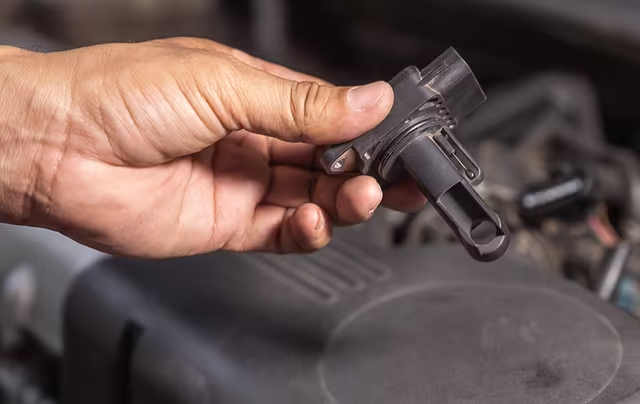
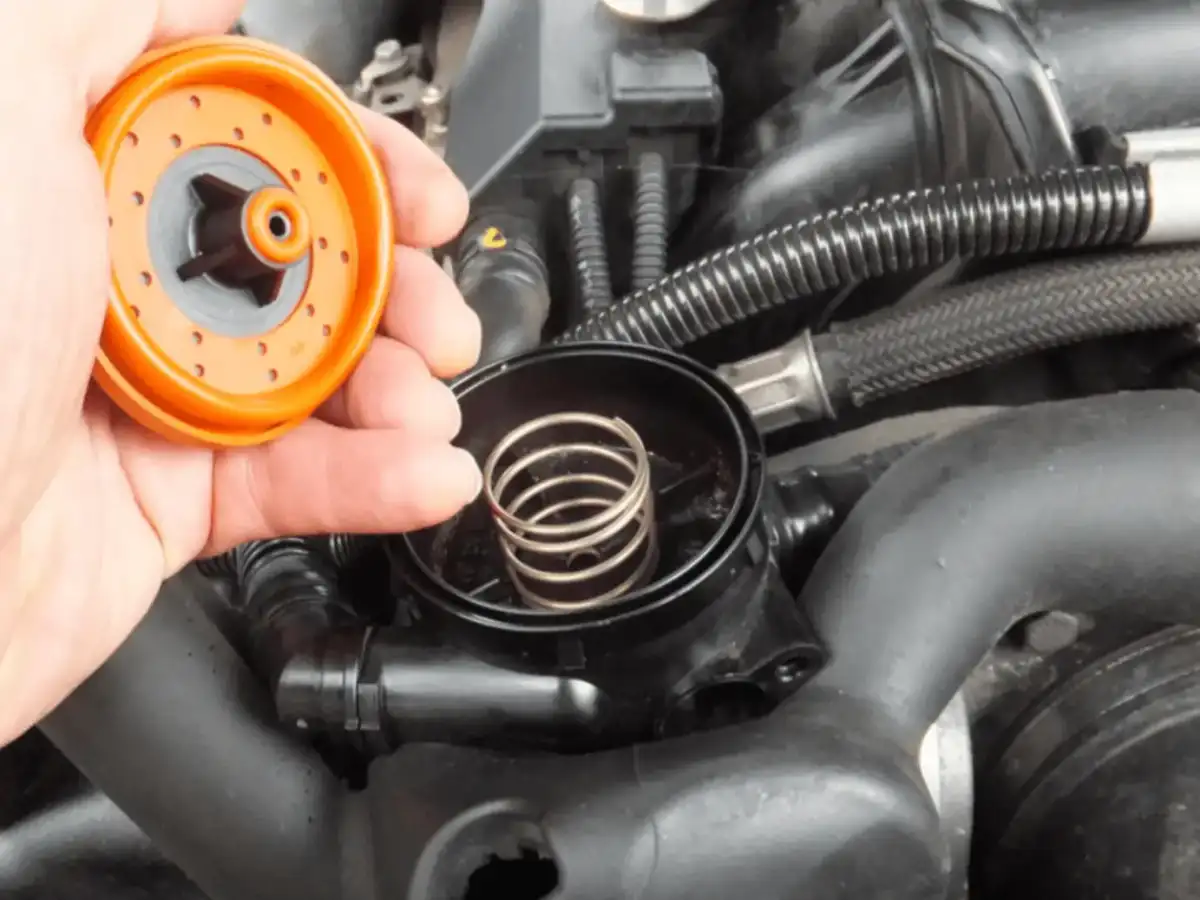
Older engines often used a simple screw-in or push-in valve. You could find it on the valve cover, pull the hose, and replace it in minutes. Many newer engines made the system less obvious. The valve may sit inside a plastic valve cover, combine with an oil separator, or run through molded hoses that crack on the underside where you cannot see.
That design shift changes the repair conversation. On some BMW, Audi, Volkswagen, Ford EcoBoost, GM, Hyundai, Kia, and Toyota engines, the “valve” may not be one cheap piece sitting in open view. It may be a diaphragm, a separator chamber, or a molded assembly. You can still have a PCV fault, but the repair may involve more parts.
The odd insight is that modern systems can fail in cleaner-looking ways. You may not see a dramatic leak at first. Instead, you may hear a honk or whistle, find oil in the intake boot, smell hot oil after highway driving, or notice that the idle changes when the oil cap is loosened. The engine is giving clues, but they are quieter than a puddle.
That is why maintenance history matters. A driver who bought a used SUV at 95,000 miles with no service records should treat PCV inspection as part of baseline care, right along with fluids, belts, and used car maintenance checks. It is not glamorous. It can save a gasket job.
How to Check the Problem Before Replacing Parts
Diagnosis should start with pattern reading, not part swapping. A PCV valve can be cheap. Wrong repairs are not. If you replace the valve but ignore a collapsed hose or clogged separator, the engine may keep leaking or idling poorly. If you replace gaskets without measuring pressure, you may treat the bruise and miss the punch.
Simple driveway signs that deserve attention
Begin with the evidence you can see, smell, and hear. Look for oily residue around the valve cover, dipstick tube, oil cap, intake hose, and throttle body inlet. A wet trail near the highest part of the engine often points away from a lower gasket. Oil moves down and backward with airflow, so the first wet area matters more than the biggest mess.
Use a flashlight and a paper towel rather than a pressure washer. Dab suspected areas after a drive and note which spots become wet again. Take photos from the same angle over a few days. That small record helps a mechanic see whether the leak is active, spreading, or left over from an old spill.
Listen at idle with the hood open. A whistle, chirp, or sucking sound near a valve cover can point to a torn diaphragm or leaking hose. Be careful around moving belts and hot parts. If the engine idle changes when you remove the oil cap, that clue needs context. A slight change can be normal. A hard suction, loud hiss, or near-stall can suggest the crankcase vacuum is not behaving as designed.
You can also watch behavior across conditions. Does the rough idle appear mostly warm? Does the oil smell show up after a highway run? Did oil leaks begin after a cold snap? Did oil use climb after switching to long intervals? Those details help more than a vague “runs bad” note at the service desk.
When smoke testing and scan data matter
A repair shop can test the system with better tools. A smoke test may reveal split PCV hoses, loose fittings, or intake leaks that hide under covers. Scan data can show fuel trim changes at idle, which often become more obvious when unmetered air is entering through the ventilation circuit. Some shops can measure crankcase vacuum or pressure with a manometer instead of guessing.
This is where a sharp mechanic earns the bill. A lean code does not always mean the PCV part failed. It can come from intake boots, brake booster leaks, dirty mass airflow readings, or exhaust leaks near oxygen sensors. Oil leaks do not always mean pressure trouble either. A gasket can fail from age and heat alone. Good diagnosis keeps both truths in the room.
For a home mechanic, the safe move is to inspect the whole pathway. That means valve, grommet, hose, separator, oil cap seal, and any molded tube tied into the intake. If your model uses a valve-cover diaphragm, look up whether the diaphragm is serviceable or whether the cover is sold as a unit. Then compare that with your symptoms before buying parts.
A useful rule: one symptom is a hint; a cluster is a case. Rough idle, oily intake film, rising oil use, and fresh seepage around upper engine seals tell a stronger story than any single sign alone. Build the case before spending money.
Do not ignore the owner’s manual either. Some engines have service notes that mention breather parts during certain repairs. A shop with access to model data can see whether your car has updated hoses, revised covers, or known failure points. That information can keep the diagnosis from turning into a guessing contest.
Repair Cost, Risk, and Prevention for American Drivers
The financial side is where PCV trouble gets unfair. The cause may be small, but the damage can spread. A $20 valve on one car may sit next to a $300-plus assembly on another. Labor can range from minutes to hours because the part may live under an intake cover, behind brittle hoses, or inside a valve cover.
When a cheap valve becomes a larger repair
If you catch the fault early, repair may be simple. A technician replaces the valve, hose, or grommet, clears codes, cleans the oily residue, and checks whether the idle settles. On many older U.S. market cars and light trucks, that is still a sensible weekend repair for a careful owner with basic tools.
The picture changes when pressure has already forced oil past seals. Valve cover gaskets can be manageable. Timing cover leaks are more involved. Rear main seal leaks can become expensive because access is poor. That is why “I’ll wait until the leak gets worse” can be a costly bet. The leak may not be the main disease.
One example: a driver in Texas notices a burning oil smell from a four-cylinder commuter car but sees no puddle. The valve cover edge is damp near the exhaust side. If the PCV hose is blocked, replacing only the gasket may feel right and still fail. Fixing the breathing problem first may keep the new gasket dry.
Maintenance habits that keep pressure under control
Prevention is not fancy. Change oil on time with the grade your owner’s manual calls for. Do not stretch intervals because the dipstick still shows oil. Oil can be present and still carry moisture, fuel dilution, and residue. That mix is rough on narrow passages.
Inspect the ventilation system during spark plug service, valve cover work, intake cleaning, or any repair that already gives access. Ask the shop to check hoses for soft spots, cracks, collapsed sections, and oil saturation. Rubber and plastic age faster near heat, and many PCV hoses fail from the bottom where they are least visible.
Parts choice matters as well. A bargain hose that fits poorly can create the same vacuum issue you were trying to solve. For engines with sensitive idle control, original-equipment parts or respected aftermarket brands are often worth the extra money. The goal is not to buy the priciest piece. It is to avoid repeating the labor.
Use a model-specific schedule when available. Some engines treat the PCV part as routine service. Others bury it inside an assembly and expect inspection when symptoms appear. If your car is past 100,000 miles, PCV inspection belongs beside engine oil leak repair basics, not after them. It is one of those small checks that keeps larger repairs honest.
The counterintuitive move is to clean less and observe more before the appointment. If you scrub the engine bay spotless before diagnosis, you may erase the trail the mechanic needed. Wipe enough to confirm fresh oil, take photos, then let the shop see the pattern.
Conclusion
A PCV problem is easy to dismiss because the part lacks drama. It does not look like something that can make an engine shake at idle or push oil past seals. Yet that is exactly why it deserves respect. The system manages vapor, vacuum, and crankcase pressure in a space most drivers never see.
When oil leaks, rough idle, oil smell, and unexplained oil use arrive together, take clogged PCV valve symptoms as a serious clue rather than a random maintenance note. You may still need a gasket, hose, coil, or intake repair. But the breathing system should be checked before larger parts get blamed.
The smartest path is simple: read the pattern, inspect the full circuit, fix the cause, then clean and monitor the engine. It rewards early attention because small restrictions can turn into larger seal, mixture, and drivability complaints. That order protects your money and your time. Before you approve a major oil leak repair, ask one direct question: has the PCV system been tested?
Frequently Asked Questions
Can a clogged PCV valve cause oil leaks?
Yes, it can raise crankcase pressure and push oil past weak gaskets or seals. The leak may show near the valve cover, timing cover, oil pan, or rear main seal area. The gasket may still need repair, but pressure should be checked first.
Why does a bad PCV system cause a rough idle?
Extra air can enter through a stuck-open valve, torn diaphragm, or cracked hose. The engine computer may not measure that air, so the mixture runs lean at idle. Low-speed operation exposes the shake because the engine has less margin.
Is it safe to drive with a suspected PCV problem?
Short trips to a repair shop are usually reasonable if oil level is safe and the engine is not misfiring hard. Long driving is risky when leaks are active, oil use is climbing, or warning lights are flashing. Check the dipstick first.
How much does PCV valve replacement usually cost?
Cost depends on design and access. A simple valve can be cheap, while a valve-cover or oil-separator assembly can cost far more. Labor also changes by engine layout. Ask the shop whether hoses and grommets are included.
Can I clean a PCV valve instead of replacing it?
Cleaning may help an older metal valve, but many plastic valves, diaphragms, and molded assemblies should be replaced. Solvent can damage rubber pieces. If the part is cheap and access is easy, replacement is usually the cleaner choice.
What codes can appear when the PCV system fails?
You may see lean mixture codes, idle control codes, misfire codes, or emissions-related codes. The exact number depends on make and model. Codes should guide testing, not replace it, because intake leaks and sensor faults can look similar.
Does oil in the intake mean the PCV valve is bad?
Not always. A light oil film can be normal in some engines. Heavy pooling, smoke, rising oil use, or idle trouble makes the PCV system more suspect. Turbocharged engines also need extra care because boost-side oil issues can overlap.
When should the PCV system be inspected?
Check it during oil leak diagnosis, rough idle troubleshooting, spark plug service, valve cover work, or after buying a higher-mileage used car. Cold-weather short trips and overdue oil changes make inspection more urgent, especially past 100,000 miles.