A small red spot under the front of your car can turn a normal morning into a guessing game. When a power steering fluid leak is the reason, the source is usually a hose, seal, pump, fitting, cooler line, or steering rack, and the fastest answer comes from tracing where the fluid travels instead of replacing parts at random. That matters for U.S. drivers because the same warning sign can mean a cheap clamp issue on one car and a costly rack job on another. A smart check starts with the puddle, moves to the reservoir, then follows wet parts from the highest point down. For more plain-English auto ownership help, practical vehicle maintenance guides can help you think like a careful owner instead of a rushed customer. The goal is not to become a mechanic overnight. It is to know what you are seeing, ask better questions at the shop, and avoid driving when the steering gives warning. A leak does not need drama to deserve attention. The quiet ones often cost the most.
Why the First Clue Is Usually on the Ground, Not Under the Hood
The mistake many owners make is starting with the cleanest-looking part. Fluid does not respect neat logic. It runs along brackets, drips off a crossmember, sprays from a pulley, and lands far from the failed seal. So the first clue is often the stain on the pavement, not the shiny reservoir cap. That stain gives you direction before you ever touch a wrench.
Power steering leak symptoms that show up before the puddle grows
The early signs are often felt before they are seen. A steering wheel that feels heavier during parking, a soft whine when turning at low speed, or a groan that gets louder near full lock can point toward low fluid or air entering the hydraulic circuit. Repair references commonly list low reservoir level, whining noises, hard steering, and reddish-brown spots as common warning signs.
Those power steering leak symptoms can come and go at first. A driver in Ohio might notice the wheel complains on a cold morning, then feels normal after ten minutes. A driver in Phoenix might see the same problem after heat has softened an old return hose. Neither case means the leak healed itself. It means the system still has enough fluid to help part of the time.
The non-obvious clue is noise after startup. A brief whine from the pump is often blamed on age, but it may be the pump pulling air through a low reservoir. Air is not harmless. It can foam the fluid, reduce assist, and make the pump work harder than it should.
You may also notice the steering feels normal at highway speed but heavy in a grocery store parking lot. That fools people because the car still tracks straight on the road. Power assist matters most at low speed, when the tires scrub against pavement and the pump has to do its hardest work. A leak can hide during easy driving and shout during one tight turn.
What the color, smell, and location tell you
Fresh power steering fluid is often red, pink, amber, or clear, depending on the vehicle and fluid type. Old fluid can look brown. That is why color alone is not proof. Transmission fluid can also look red, and engine oil can darken everything once it mixes with road grime. Location matters more.
A wet spot under the front driver-side area can suggest a pump, hose, cooler line, or rack connection. Drips near the center of the front subframe can point toward a steering rack leak, especially on rack-and-pinion cars. Fluid sprayed around the belt area may come from the pump shaft seal or a high-pressure line misting under load.
Smell adds another clue. Fluid that lands on hot exhaust parts gives off a sharp, burnt odor. On some front-wheel-drive cars, a small spray from a line can coat the underside without leaving a neat puddle. That is why a dry driveway does not always mean a dry system.
Use cardboard if the driveway is already stained. Slide a clean piece under the front end overnight, mark the front bumper side with a pen, and check where the drops land. It sounds old-school because it is. It also works better than guessing from a dark patch on old concrete.
Power Steering Fluid Leak Causes Start With Where the Fluid Travels
The system is simple in idea and messy in real life. A pump sends fluid through a pressure hose to the steering gear. A return path sends fluid back to the reservoir. Seals and fittings hold pressure at each connection. Any weak point can leak, but each weak point leaves a different pattern. Hoses, seals, pump problems, and poor connections are widely cited as common sources of fluid loss in hydraulic steering systems.
When a pressure line or return hose starts to sweat
A power steering hose leak rarely begins as a dramatic split. More often, the hose turns hard, the crimped end starts to seep, or a small rub mark wears through where the hose touches a bracket. You may see a damp, glossy line before you see a drip. That is the moment to act.
Pressure hoses live a harder life than return hoses because they carry fluid under load when you turn the wheel. A pinhole in a pressure hose can spray only while steering effort is high, then look quiet in the driveway. A return hose leak is usually messier and slower, but it can still pull air into the system if the fluid level drops.
Here is the catch: a power steering hose leak can fake a pump problem. Fluid may run along the hose and drip from the bottom of the pump, making the pump look guilty. A shop that cleans the area before diagnosis is not wasting time. It is preventing the wrong repair.
Climate changes the story too. Road salt in the Northeast can corrode metal lines and cooler tubes. Desert heat can harden rubber faster. On older pickups, the hose can rub where an engine mount has softened and allowed extra movement. The leak is then not only a hose issue. It is a clue that another worn part helped create it.
Why pump seals and fittings can fool you
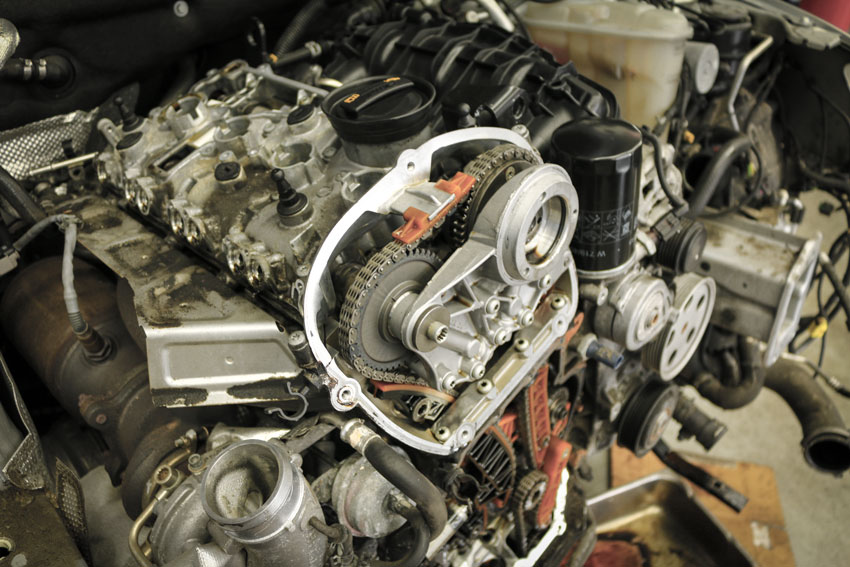
A pump can leak at the shaft seal, the rear housing, the reservoir O-ring, or the line fitting. The shaft seal is sneaky because the pulley can sling fluid outward. By the time you open the hood, the mess may look like it came from the belt, the timing cover, or even an oil leak.
Fittings can mislead you too. A loose clamp on a low-pressure return hose may cause a slow seep that leaves the reservoir wet. A cracked O-ring on a pressure fitting can create a fine mist. The driver sees low fluid, the mechanic sees fluid everywhere, and both people feel tempted to name the biggest part first.
The smarter move is to find the highest wet point. If the top of the pump is dry and the bottom is wet, look at the hoses above it. If the pulley face is wet, suspect the shaft area. If only the fitting is wet, the repair may be smaller than the mess suggests.
One more trap: spilled fluid from a sloppy top-off can mimic a leak for days. If the reservoir neck is wet but the level holds steady, clean it and recheck after a few drives. A true leak returns. A spill fades. That small distinction can keep a good pump from being blamed for somebody’s messy funnel work.
How to Trace the Source Without Guessing at Parts
Once you understand where leaks tend to happen, diagnosis becomes a slow walk rather than a wild hunt. You are not proving which part is expensive. You are proving where fresh fluid first appears. That difference can save hundreds of dollars, especially on older trucks, commuter sedans, and family SUVs where labor adds up fast.
Clean first, inspect second, drive last
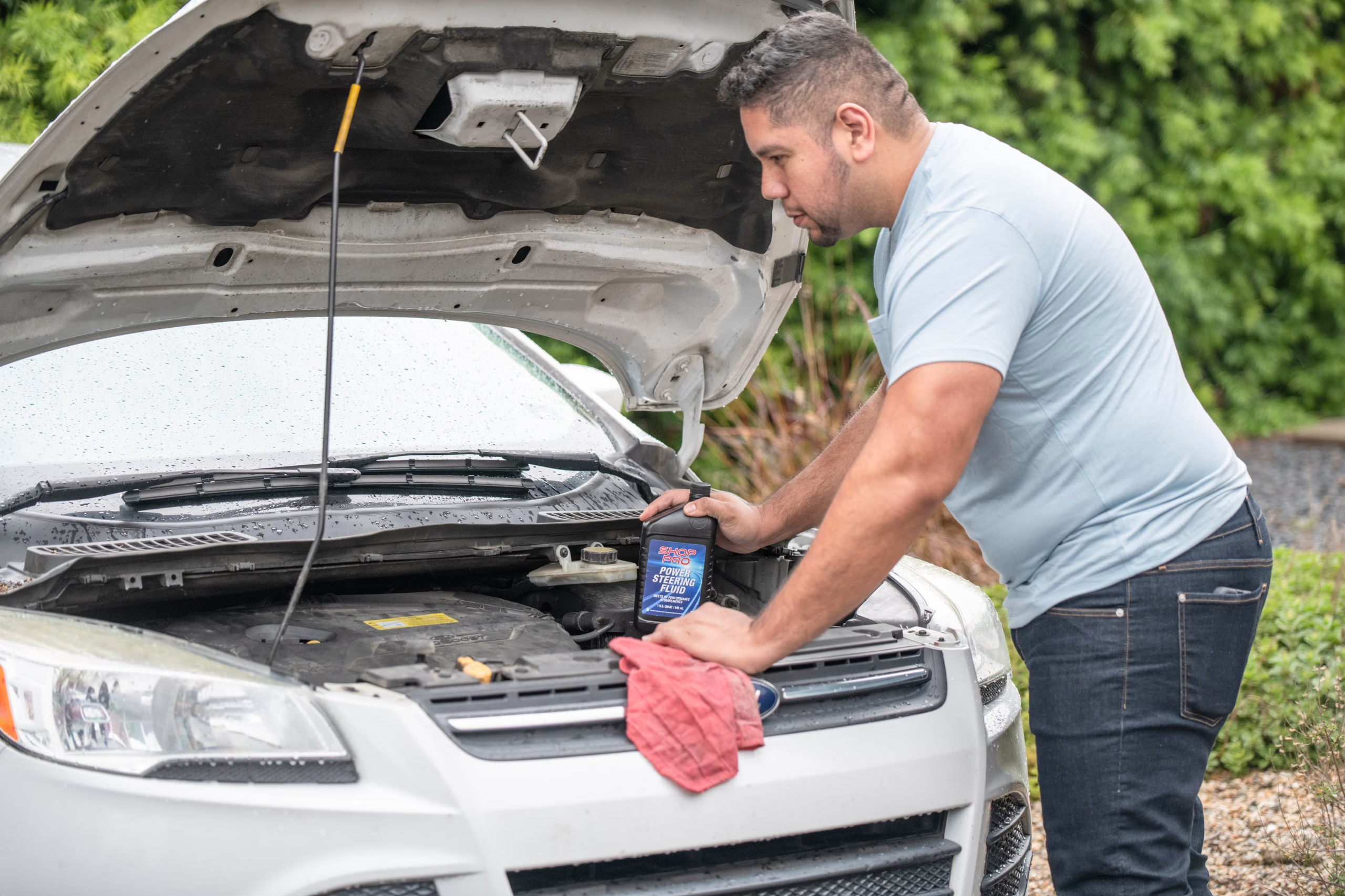
Start with a safe setup: engine off, vehicle parked on level ground, wheels cool, and a light in your hand. Check the reservoir level and cap. Do not overfill it. Use the fluid type listed in the owner’s manual or cap marking, because some vehicles need automatic transmission fluid while others need a specific steering fluid.
Next, clean the wet area with a shop-safe degreaser and a rag. You do not need a showroom engine bay. You need enough grime gone to tell old wetness from new wetness. Then turn the steering wheel gently from side to side with the engine running, without holding it hard at full lock. Watch for fresh shine at hose crimps, fittings, the pump body, and the rack boots.
Dye can help when the leak hides. Many shops add UV dye, drive the vehicle, then use a blacklight to trace the path. Pressure testing can reveal small leaks that only appear under load. Current repair guides also point to UV dye, pressure testing, and full component inspection as ways technicians confirm the source.
There is a right time to stop your driveway inspection. If the leak sits near a moving belt, hot exhaust, or a raised vehicle you cannot support safely, hand it off. A careful owner knows limits. The point is not to win a battle with the car in the driveway. The point is to walk into the shop with enough facts to avoid a blind diagnosis.
When a steering rack leak hides inside the boots
A steering rack leak can be quiet for a long time because the fluid may collect inside the rubber accordion boots at the rack ends. The driveway stays clean. The reservoir drops. The pump whines. Then one day the boot tears or overflows, and the leak seems sudden.
This is where owners get burned. Replacing an outer tie rod boot will not fix fluid inside a rack boot. That fluid usually came from an internal rack seal. On many vehicles, rack replacement also means an alignment afterward, so the total bill can climb beyond the part price.
A steering rack leak is not always the first place to blame, though. Fluid from a higher hose can run down and wet the boot from the outside. Ask the shop whether the fluid was found inside the boot or only on the exterior. That one detail changes the whole repair conversation.
The counterintuitive part is that the most expensive-looking wet area may not be the source. Gravity makes a cheap upper hose leak look like a failed rack. Splash from the road can spread fluid across the subframe. A good diagnosis follows clean, fresh fluid, not the largest dirty patch.
What to Repair First and When to Stop Driving
The right repair depends on the leak source, the rate of fluid loss, and how the steering feels. A damp fitting is not the same risk as a hose spraying near a hot exhaust pipe. A slow rack seep on an old car is not the same problem as a pump running dry every commute. Good decisions come from sorting urgency, not fear.
Deciding between a clamp, hose, pump, or rack
Small fixes exist. A loose return clamp, cracked reservoir cap seal, or worn O-ring can sometimes be repaired without changing major parts. A power steering hose leak may call for replacing the full line, especially if the crimp is wet or the rubber feels hard. Cutting corners on a high-pressure line is asking for trouble.
A pump replacement makes sense when the pump body or shaft seal is the source, or when the pump has been damaged from running low on fluid. If the pump whines after the leak is repaired and the system is bled, it may already be worn inside. Repair cost ranges vary by vehicle, but recent shop guides often place hose work in the lower range and rack replacement in the higher range, with pump replacement in between.
Before approving a rack, ask for evidence. A photo of fluid inside the boot, a dye trail from the rack seal, or a clear inspection note is better than “it looks wet down there.” Shops that explain the failure point tend to earn trust. Vague answers deserve a pause.
A second opinion can make sense when the quote jumps straight to the rack without showing the leak source. That does not mean the first shop is dishonest. It means rack work is expensive enough to deserve proof. Most good technicians understand that and will show you what they found.
Why topping off fluid is a delay, not a repair
Topping off can get you out of a parking lot, but it is not a fix. Low fluid means the closed hydraulic system is losing fluid somewhere. If you keep filling it without finding the source, the pump can overheat, the belt can get coated, and the steering assist can fade when you need it most.
Stop driving if the wheel gets hard to turn, the pump screams, fluid pours out, smoke appears from fluid hitting hot parts, or the belt area gets soaked. Also check for open recalls before assuming every steering issue is normal wear. NHTSA lets U.S. owners search recalls and report safety problems through its official recall search, which is worth checking when a steering issue feels sudden or unusual.
For broader ownership planning, connect this repair with common car fluid warning signs and steering system safety checks. A leak is not only a repair item. It is a clue about how the vehicle has aged, how it was serviced, and whether the next owner will inherit a cheap fix or an expensive mistake.
The safest repair plan also includes bleeding the system after parts are replaced. Air trapped in the circuit can keep the pump noisy and the steering uneven. If the vehicle leaves the shop still groaning, do not assume that sound is normal. Ask whether the system was bled, the level was rechecked, and the wheel was tested at low speed.
Conclusion
The best diagnosis starts with patience, not parts. Look at the stain, check the reservoir, clean the wet area, and follow fresh fluid from the highest point down. A power steering fluid leak should be treated as a steering problem first and a money problem second, because losing assist in a tight turn or parking maneuver can surprise even an experienced driver. The repair might be a clamp, hose, O-ring, pump, or rack, but guessing makes every option more expensive. Ask for the source, ask whether dye or pressure testing was used, and ask for a photo when the rack is blamed. Drivers who do that sound informed without pretending to be technicians. That is the sweet spot. Catch the leak early, fix the part that failed, and keep the car steering like it still has miles left to give.
Frequently Asked Questions
How do I know if the fluid under my car is from the steering system?
Look for a thin oily spot near the front of the vehicle, often red, amber, pink, or brown. Then check the steering reservoir level. If the level is dropping and the steering feels heavy or noisy, the steering system is a strong suspect.
Can I drive to work with low power steering fluid?
A short drive may be possible, but it is risky if the wheel feels heavy or the pump is loud. Low fluid can damage the pump and reduce steering assist during slow turns. Add the correct fluid only as a temporary step.
What does a bad steering pump sound like?
A failing or fluid-starved pump often makes a whining, groaning, or buzzing sound when you turn the wheel. The noise may get louder near full lock. If the sound changes after adding fluid, the pump may be reacting to low level or air.
Why does my steering only feel stiff when parking?
Low-speed steering needs more assist, so problems show up while parking before they show up on the highway. Low fluid, air in the system, a weak pump, or a leak under pressure can make the wheel feel heavy in tight spaces.
Is stop-leak safe for a power steering system?
It may slow a small seal seep for a short time, but it can also swell seals and create new problems. It is not a good plan for hose damage, rack failure, or pump leaks. Use it only after reading the product and vehicle guidance.
How much does it cost to fix a steering fluid problem?
Cost depends on the failed part. A hose or clamp issue is usually far cheaper than a pump or rack. Rack work often costs more because of labor and alignment. Ask the shop to prove the source before approving a larger repair.
Why is fluid collecting inside the rack boot?
Fluid inside a rack boot often means an internal rack seal is leaking. The boot is meant to keep dirt out, not hold hydraulic fluid. Ask whether the fluid is inside the boot or only on the outside before approving rack replacement.
What should I ask a mechanic before paying for repair?
Ask where the fresh fluid starts, whether the area was cleaned before inspection, and whether dye or pressure testing was used. Request photos of the leak source. A clear answer helps separate a real diagnosis from a guess based on wet parts.